I remember exactly when my hands started sweating. I was 11 years old, in class, and my hands started sweating and dripping. My classmates were looking at me like I was weird, and I felt disgusted.
It did not stop after that day. I would wipe my palms on my pants before shaking anyone’s hand, and half the time it did not matter. Paper would stick to my hands. Holding a pen through a full exam was a project.
If that sounds familiar, you have probably already been given the useless advice. Dry your hands. Relax. It is not the drying, and it is not the relaxing. Sweaty hands — palmar hyperhidrosis, in the medical term — are a signaling problem. Your palms are getting told to sweat when there is no heat and no reason, usually right before the moment you most need them dry: a handshake, an interview, holding a steering wheel, signing your name.
This page is what I have learned about calming sweaty hands naturally, including an honest account of what did not work for me. I am not a doctor, and this is not medical advice. It is thirty years of living with this, and what I found when I finally studied it properly. The full story is in my guide to managing excessive sweating naturally.
Why hands sweat when nothing is hot
Your hands and feet have some of the densest sweat glands in your body, and they are wired more to emotion than to temperature. That is why palms sweat before a presentation and feet sweat in an air-conditioned room. The order to fire comes from the nervous system — the same system that runs your stress response.
That is why they get worse with anticipation, not just during the moment itself. It is also why trying not to think about them backfires — the worry is itself a trigger. And heat makes it worse, but heat is rarely the cause.
So the goal is not to block your palms. It is to turn down how often and how hard that signal fires. The Science page explains the nervous-system model in more depth.
What I tried on my hands, honestly
Strong antiperspirants. They help some people under the arms. On my hands they did almost nothing, and the strong ones irritated my skin. Hands wash, touch, and grip all day — a surface product is fighting a losing battle there.
Botox injections in the hands. Extremely painful — dozens of injections into your palms. It weakened my grip, and the sweating continued anyway. I never did it again.
Medication. A prescription drug that dries up secretions across the whole body helped a little, and caused urinary retention, because a drug that turns down one gland turns down others. That trade-off is what pushed me to study how these drugs actually work, and to look for a gentler way to work on the signal instead.
Surgery. It was mentioned. I refused. Cutting nerves is permanent, and some people end up sweating more in new places afterward. A permanent alteration to fix a signaling problem never sat right with me.
None of this means those options are wrong for everyone — a dermatologist can walk you through them properly. It means that if they have been wrong for you too, the natural route is not a consolation prize. For hands especially, it works on the level where the problem actually starts.
The natural habits that genuinely help sweaty hands
None of these is a cure. Together they lower the baseline, which means fewer episodes, weaker ones, and hands that recover faster when an episode does start.
Track when it happens. For two weeks, note the time, the place, and what was coming up. Most people find their hand sweating is not random — it clusters around specific situations: meetings, driving, social pressure, caffeine, heat plus stress together. You cannot manage a pattern you have not seen. The sweat-pattern page helps with this.
Cut the amplifiers before the moments that matter. Caffeine and spicy food both push the same nervous system that is already over-firing. You do not have to quit coffee forever. But if you have an interview at ten, the double espresso at nine is working against you.
Cool down fast when an episode starts. Cold water on the wrists and hands, a cold drink, cooler air. You are not just cooling your skin — you are telling your nervous system there is no emergency, and hands respond quickly because the signal is what drives them.
Remove the dread, not just the sweat. Keep a small towel or handkerchief where you work. Know where the bathroom is so you can run cold water before a meeting. This sounds like surrender. It is the opposite. The fear of being caught with wet hands is itself one of the strongest triggers, and every bit of preparation you do quietly lowers that fear — and the episodes get weaker with it.
Steady the baseline. A short night makes the next day’s stress response jumpier, and hands show it first. Regular exercise helps over time too: sweating hard on purpose seems to retrain the system. In my own case, I sweat normally at the gym now — it is the stress episodes that faded.
Where a natural daily supplement fits
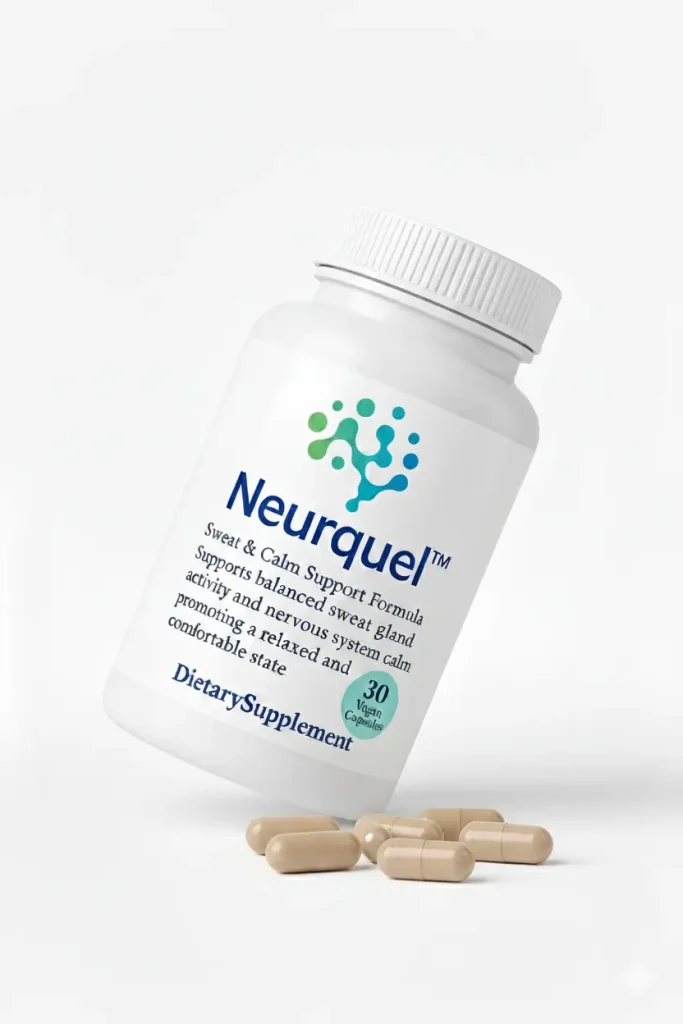
This is the part I built Neurquel for, so let me be careful and straight about it.
A supplement cannot cure hyperhidrosis, and anyone who promises you one is selling you something. What a well-built natural formula can do is support calmer nervous-system signaling, so the “fire” order gets sent less often and less intensely. That matters most for hands, because hand sweating is the most signal-driven kind there is. Neurquel was never about shutting sweat off — normal sweat stays. It is about the adrenaline-linked flooding easing: the handshake moments, the meeting dread, the pen slipping in an exam.
What my own fourteen months of daily use look like: I take it in the morning. On an empty stomach it kicks in within the hour; with food it takes longer. It lasts the day. The adrenaline-linked episodes became rare — some days there are none at all — and when my hands do sweat now, it is for a normal reason, like heat or a workout.
Two honest warnings. First, this is not a quick fix. It is a daily routine, taken at a consistent time, over weeks. Judging it on one morning is measuring the wrong thing. Second, some people notice dry mouth in the first weeks. I did. It eased as my body adjusted, and chewing gum handled the rest.
If you want to try it the way I would want to try something new, start with the free trial and judge it over the full ten days, not one morning.
When to see a doctor instead
Get checked, promptly, if any of these sound like you:
- The sweating started suddenly as an adult, or changed character recently.
- You sweat heavily at night, soaking the sheets, especially with weight loss, fever, or a racing heart.
- The sweating is all over your body rather than mainly your hands, feet, underarms, or face.
- It started after a new medication.
- One hand sweats much more than the other.
Those can be signs of something else going on, and no article or supplement is the right answer until a doctor has ruled the serious causes out.
The bottom line
Sweaty hands are not a hygiene failure, and they are not something you just have to accept. They are a signal your nervous system sends too often and too hard — and signals can be influenced: by knowing your triggers, removing the amplifiers, steadying your baseline, and supporting the nervous system daily instead of attacking your palms a few times a year.
I spent decades wiping my palms on my pants before every handshake. Nobody should have to organize their life around that. Start with the pattern — two weeks of notes — and you will learn more about your own hands than any product page can teach you, including mine.
Questions about Neurquel itself are answered on the FAQ page.
— M. Alassaf, founder of Neurquel